
Manuscript Template
These writing guidelines provide the structural, layout, and formatting requirements for manuscripts submitted to Jurnal Masharif Al-Syariah: Jurnal Ekonomi dan Perbankan Syariah. Authors are requested to prepare their manuscripts in strict accordance with these standards to ensure an efficient peer-review and editorial process. Submitted papers must represent original, unpublished empirical or theoretical research contributing to the advancement of Islamic economics, finance, and banking studies.
ARTICLE TITLE (CAPITAL, 20 PT, LUCIDA CONSOLE, CENTER, BOLD)
Author Name (12 pt, Arial, Bold)
Institutional Affiliation (12 pt, Arial)
Email Address (12 pt, Arial)
Abstract
The abstract must be written in a single column, concise, and not exceed 200 words (Justified, 12 pt, Arial, Single Line Spacing). It should synthesize the research background, purpose, methodology, core findings, and theoretical or practical implications.
Keywords: 3 to 5 relevant keywords, separated by semicolons (Italic, 12 pt)
General Formatting Specifications
-
Margins: Top: 2 cm | Left: 3 cm | Bottom: 3 cm | Right: 2 cm
-
Font & Spacing: Arial, 12 pt, 1.15 line spacing (unless specified otherwise)
1. Introduction (Bold, 12 pt)
The introduction should clearly cover: (1) research background and context; (2) research objectives; and (3) research contributions and benefits. Indent the first line of each paragraph by one tab. Ensure proper spacing between section titles and the first sentence.
2. Literature Review (Bold, 12 pt)
This section presents relevant theories and previous studies that serve as a logical foundation for hypothesis development and conceptual framework construction. Subheadings may use a two-level numbering system (e.g., 2.1, 2.2).
2.1 Subheading Level 2 (Bold, 12 pt)
Mathematical formulas and equations must be numbered sequentially with right-aligned numbers in parentheses. Use the standard Equation Editor:
$$s = (s_1 + s_2 + s_3 + s_4 + s_5) \pmod{p-1} \quad \text{(1)}$$
3. Research Methods (Bold, 12 pt)
This section details the data sources, collection techniques, research model, operational definition of variables, and data analysis methods. Subheadings may be used as needed.
4. Results and Discussion (Bold, 12 pt)
Present research findings clearly using tables and figures where applicable, maintaining sequential numbering. Authors may divide this section into 4.1 Results and 4.2 Discussion.
4.1 Tables (Bold, 12 pt)
Tables must be left-aligned and formatted using standard table tools (Insert | Table). Cite tables explicitly within the text (e.g., "...as shown in Table 1"). Do not use vertical gridlines.
Table 1. Title of table in sentence case (no ending period)
| No | Header Column (Italic) | Header Column |
| 1 | Table content (Regular font, minimum 8 pt) | Regular font |
Note: Avoid splitting tables across pages. If necessary, repeat the header row on the next page, retain the same table number, and append "(Continued)" to the title.
4.2 Figures (Bold, 12 pt)
Figures must be clear, professional, black-and-white, and without outer frames. Place figure captions directly below the image using sentence case.
Figure 1. Title of figure in sentence case
5. Conclusion and Suggestions (Bold, 12 pt)
Summarize the main findings, conclusions, and practical or policy suggestions. Numbered lists may be used if necessary.
6. References (Bold, 12 pt)
-
Reference Manager: Mendeley using APA Style.
-
Source Ratio: Minimum 80% from primary peer-reviewed national or international journals and 20% from reference books.
-
Recency: References must be published within the last 10 years.
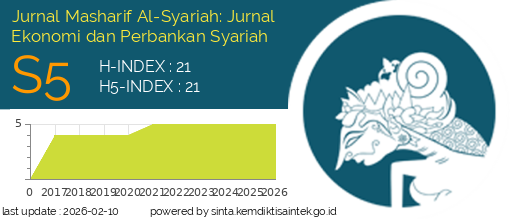
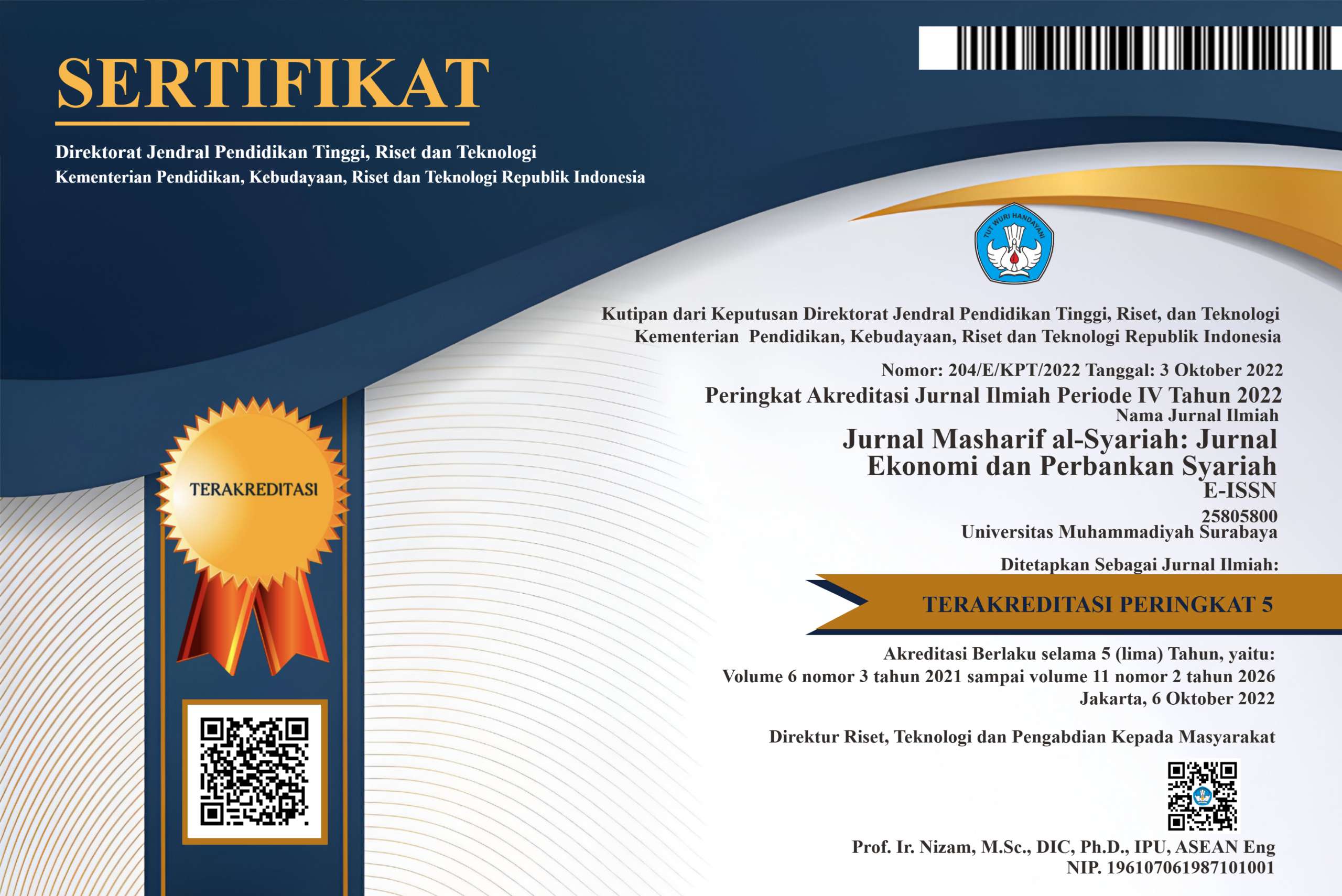
 Sinta
 Google Scholar

 Garuda


 Mendeley
 Zotero
 Grammarly
 Turnitin
 Quilbot

 Facebook
 Instagram