

Bilah Samping Artikel
Unduhan
Isi Artikel Utama
Abstrak
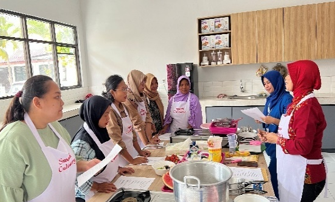
Latar Belakang: Peningkatan kasus gangguan jiwa dan tingginya angka kekambuhan ODGJ (orang dengan gangguan jiwa), serta kurangnya rehabilitasi memadai dan kompetensi perawat, menghambat kemandirian ODGJ belum mencapai kemandirian ekonomi menjadi permasalahan serius di Kota Surabaya Tujuan: Program ini bertujuan meningkatkan kualitas hidup dan kemandirian ekonomi ODGJ, serta memperkuat kapasitas perawat dalam pelayanan jiwa komprehensif. Metode: Pengabdian masyarakat dilakukan melalui edukasi dan pendampingan di dua lingkup: intervensi langsung pada pasien di Bengkel Sehat Mandiri Surabaya dan peningkatan kompetensi perawat di 63 Puskesmas Surabaya Hasil: Pasien menunjukkan adanya peningkatan keterampilan motivasi dan kemandirian serta peningkatan keterampilan produktif, partisipasi aktif kegiatan rehabilitasi tercermin dalam pembuatan frozen food, bantal sofa, dan sabun cuci piring, serta pelatihan kewirausahaan dan pemanfaatan e-commerce. Sementara itu, kompetensi perawat dalam pemulihan psikososial dan pencegahan relaps ODGJ di Puskesmas menunjukkan peningkatan pemahaman mengenai pemulihan psikososial dan pencegahan kekambuhan setelah diberikan edukasi. Kesimpulan: Program pengabdian ini berhasil memberikan dampak positif terhadap pemulihan penderita gangguan jiwa serta memperkuat kapasitas pelayanan kesehatan jiwa di tingkat komunitas secara holistik dan berkelanjutan serta intervensi holistik ini berhasil memberdayakan ODGJ secara ekonomi dan meningkatkan kapasitas tenaga kesehatan, berkontribusi signifikan pada peningkatan kualitas hidup ODGJ dan pelayanan jiwa masyarakat.
Kata Kunci
Rincian Artikel

Artikel ini berlisensiCreative Commons Attribution-ShareAlike 4.0 International License.
Hak cipta artikel dimiliki oleh jurnal AKSIOLOGIYA

Ciptaan disebarluaskan di bawah Lisensi Creative Commons Atribusi-NonKomersial 4.0 Internasional.
Referensi
- Cutting, J., Copeland, B., & McNab, F. (2023). Higher working memory capacity and distraction-resistance associated with strategy (not action) game playing in younger adults, but puzzle game playing in older adults. Heliyon, 9, e19098. https://doi.org/10.1016/j.heliyon.2023.e19098
- Daulay, W., Lubis, N. L., Anshari, F. M., Nasution, S. L., & Syahputra, S. P. D. (2021). Kualitas hidup orang dengan gangguan jiwa: systematic review. Jurnal Keperawatan Jiwa, 9(1), 187–196.
- Efendi, S. (2020). Intervensi Pemulihan Psikososial untuk Pasien dengan Gangguan Jiwa atau Skizofrenia : Studi LiteraturINTERVENSI PEMULIHAN PSIKOSOSIAL UNTUK PASIEN DENGAN GANGGUAN JIWA ATAU SKIZOFRENIA: STUDI LITERATUR. Konferensi Nasional (Konas) Keperawatan Kesehatan Jiwa, 4(1), 108–118.
- Estrada-Plana, V., Montanera, R., Ibarz-Estruga, A., March-Llanes, J., Vita-Barrull, N., Guzmán, N., Ros-Morente, A., Ayesa Arriola, R., & Moya-Higueras, J. (2021). Cognitive training with modern board and card games in healthy older adults: two randomized controlled trials. International Journal of Geriatric Psychiatry, 36, 839–850. https://doi.org/10.1002/gps.5484
- Fankhauser, M. P. (1997). Psychiatric Disorders in Women: Psychopharmacologic Treatments. Journal of the American Pharmaceutical Association, 37, 667–678. https://doi.org/10.1016/S1086-5802(16)30277-7
- Givon Schaham, N., Buckman, Z., & Rand, D. (2022). The Effect of Daily Practice of Puzzle-Game Apps on Cognition in Two Groups of Older Adults: A Pre-Post Experimental Study. International Journal of Environmental Research and Public Health. https://doi.org/10.3390/ijerph192315454
- Győri, Á. (2023). The impact of social-relationship patterns on worsening mental health among the elderly during the COVID-19 pandemic: Evidence from Hungary. SSM - Population Health, 21, 101346. https://doi.org/10.1016/j.ssmph.2023.101346
- Han, A.-R., Park, S.-A., & Ahn, B.-E. (2018). Reduced stress and improved physical functional ability in elderly with mental health problems following a horticultural therapy program. Complementary Therapies in Medicine, 38, 19–23. https://doi.org/10.1016/j.ctim.2018.03.011
- Holte, A. (2024). Promotion of mental health and prevention of mental disorders in a rich welfare state: A Norwegian perspective. Mental Health & Prevention, 33, 200321. https://doi.org/10.1016/j.mhp.2024.200321
- Jaworowski, S., Barel, Y., & Gropp, C. (2003). Psychiatric Services in Israel: Need for a Continuum of Care Model. Australasian Psychiatry, 11(3), 338–340. https://doi.org/10.1046/j.1440-1665.2003.00565.x
- Karp, J. F., Dew, M. A., & Whyte, P. A. (2006). Preventing depression in older adults. Clinical Neuropsychiatry, 3(1), 69–80.
- Kartinah. (2018). Masalah Psikososial Pada Lanjut Usia. http://hdl.handle.net/11617/486
- Kil, T., Hong, H.-Y., Hwang, S.-H., Im, K.-W., Im, J.-S., & Kim, C.-S. (2019). Effect of group integrated intervention program combined animal-assisted therapy and integrated elderly play therapy on live alone elderly. Journal of Animal Science and Technology, 61(6), 379–387. https://doi.org/10.5187/jast.2019.61.6.379
- Kotijah, S., Wahidah, V. R., & Azizah, R. (2021). Terapi Okupasi Sebagai Upaya Peningkatan Kemandirian Dan Pengetahuan Pasien ODGJ Di Rumah Singgah Al-Hidayah. Jurnal Pengabdian Masyarakat Kebidanan, 3(2), 23–26.
- Krebs, C., Falkner, M., Niklaus, J., Persello, L., Klöppel, S., Nef, T., & Urwyler, P. (2021). Application of Eye Tracking in Puzzle Games for Adjunct Cognitive Markers: Pilot Observational Study in Older Adults. JMIR Serious Games, 9, e24151. https://doi.org/10.2196/24151
- Kuo, C.-Y., Huang, Y.-M., & Yeh, Y.-Y. (2018). Let’s Play Cards: Multi-Component Cognitive Training With Social Engagement Enhances Executive Control in Older Adults. Frontiers in Psychology, 9, 2482. https://doi.org/10.3389/fpsyg.2018.02482
- Kurnia, I. (2020). Rehabilitasi Psikososial Terhadap Orang Dengan Gangguan Jiwa (Odgj) Di Panti Sosial Bina Laras Harapan Sentosa 3 Jakarta Barat [Bachelor's thesis, Fakultas Ilmu Dakwah dan Ilmu Komunikasi Universitas Islam Negeri Syarif Hidayatullah Jakarta].
- Lestari, R., Yusuf, A., Hargono, R., & Setyawan, F. E. B. (2020). Review Sistematik: Model Pemulihan Penderita Gangguan Jiwa Berat Berbasis Komunitas. ARTERI: Jurnal Ilmu Kesehatan, 1(2), 123–130.
- Limb, D. (n.d.). @ Q ] B @ K EMVMX @ W @ T @ K QMB @ T ONW @ V @ D @ EMILJVLE ] QN @ I @ KQN @.
- Liu, Z., He, Z., Yuan, J., Lin, H., Fu, C., Zhang, Y., Wang, N., Li, G., Bu, J., Chen, M., & Jia, J. (2023). Application of Immersive Virtual-Reality-Based Puzzle Games in Elderly Patients with Post-Stroke Cognitive Impairment: A Pilot Study. Brain Sciences, 13(1), 79. https://doi.org/10.3390/brainsci13010079
- Lök, N., Bademli, K., & Selçuk-Tosun, A. (2019). The effect of reminiscence therapy on cognitive functions, depression, and quality of life in Alzheimer patients: Randomized controlled trial. International Journal of Geriatric Psychiatry, 34(1), 47–53. https://doi.org/10.1002/gps.4980
- Mahmoudpour, A., Shaghaghi, N., Ebrahimi, A., & Bahrami, F. (2023). Cognitive flexibility and emotional self-regulation of the elderly with Empty nest syndrome: Benefits of acceptance and commitment therapy. Health Science Reports, 6(7), e1397. https://doi.org/10.1002/hsr2.1397
- Mawarda Hatmanti, N., Yunita Sari, R., Septianingrum, Y., Nobel Bistara, D., & Choirotussanijjah. (2023). Puzzle Modality Therapy To Reduce Dementia in the Elderly. Community Service Journal of Indonesia, 5(1), 1–6. https://doi.org/10.36720/csji.v5i1.426
- McGirr, A., Dombrovski, A. Y., Butters, M. A., Clark, L., & Szanto, K. (2012). Deterministic learning and attempted suicide among older depressed individuals: Cognitive assessment using the Wisconsin Card Sorting Task. Journal of Psychiatric Research, 46(2), 226–232. https://doi.org/10.1016/j.jpsychires.2011.10.001
- Moya-Higueras, J., Solé-Puiggené, M., Vita-Barrull, N., Estrada-Plana, V., Guzmán, N., Arias, S., Garcia, X., Ayesa-Arriola, R., & March-Llanes, J. (2023). Just Play Cognitive Modern Board and Card Games, It’s Going to Be Good for Your Executive Functions: A Randomized Controlled Trial with Children at Risk of Social Exclusion. Children, 10(9), 1492. https://doi.org/10.3390/children10091492
- Muna, Z., Adyani, L., & Shavira, F. (2020). Analisis kesehatan mental pada lansia (memahami kebersyukuran pada lansia muslim di Aceh Utara). Jurnal Psikologi Terapan, 3(1), 7–11.
- Nurti, W. D., Zulfitri, R., & Jumaini. (2022). Hubungan tingkat kemandirian lansia melakukan activity of daily living dengan kondisi kesehatan mental emosional pada lansia di desa Banjar Guntung. Jurnal Medika Hutama, 3(03), 2508–2518.
- Ounalli, H., Haj Salem, R., & Zguira, M. (2020). Improving Dignity of Care in Community-Dwelling Elderly Patients with Cognitive Decline and Their Caregivers. The Role of Dignity Therapy. Behavioral Sciences, 10(12). https://doi.org/10.3390/bs10120178
- Pothimas, N., Rittiluechai, N., Maneetong, K., & Somboon, W. (2020). A cross-sectional study of factors predicting relapse in people with schizophrenia. Pacific Rim International Journal of Nursing Research, 24(4), 448–459.
- Pradnyana, G. A. (2019). Sinergitas Perguruan Tinggi dan Pemerintah Daerah Melalui Pemberdayaan Masyarakat dalam Menghadapi Revolusi Industri 4.0.
- Pratama, A., Setyawati, S., & Puspitasari, F. (2023). Gambaran masalah kesehatan jiwa pada lansia di panti werdha: narrative review. Jurnal Keperawatan Jiwa, 11(2), 331–344. https://jurnal.unimus.ac.id/index.php/JKJ/article/view/10782
- Rafik, A., Nuraeni, A., & Sumarmi, S. (2020). Terapi Okupasi pada Orang dengan Skizofrenia (ODS) di Desa Sindumartani Yogyakarta. Jurnal Vokasi Indonesia, 11(3), 373–381.
- Ramaprasad, D., Rao, N. S., & Kalyanasundaram, S. (2015). Disability and quality of life among elderly persons with mental illness. Asian Journal of Psychiatry, 18, 31–36. https://doi.org/10.1016/j.ajp.2015.10.007
- Rorong, A. T. W., Satyasari, D., & Hairunisa, N. (2024). Cognitive intervention for Mild Cognitive Impairment (MCI) among the elderly: A bibliographic network analysis of research trends. NPG Neurologie - Psychiatrie - Gériatrie, 24, 96–104. https://doi.org/10.1016/j.npg.2023.06.005
- Rusmayadi, R., Safitri, L. E., Umroh, R., & Pratiwi, J. M. (2023). ANALISIS MANAJEMEN INTERVESI TERHADAP UPAYA PROMOSI KESEHATAN JIWA DI PUSKESMAS MARONGE. Jurnal Kesehatan Tambusai, 4(3), 3939–3944.
- Sampogna, G., Del Vecchio, V., Rosa, C., Giallonardo, V., Luciano, M., Palummo, C., De Luca, M., & Fiorillo, A. (2021). Community Mental Health Services in Italy. Consortium Psychiatricum, 2(2), 86–92. https://doi.org/10.17816/CP76
- Shalafina, M., Ibrahin, I., & Hadi, N. (2023). The Overview of Mental Health Among Elderly. Jurnal Ilmiah Mahasiswa Fakultas Keperawatan, 7(4), 90–95. https://jim.usk.ac.id/FKep/article/view/24319/13404
- Sugiyama, H., & Nakamura, K. (2022). Temporary improvement of cognitive and behavioral scales for Dementia elderly by Shiritori word game with a dialogue robot: A pilot study. Frontiers in Robotics and AI, 9, 941056. https://doi.org/10.3389/frobt.2022.941056
- Susanto, T. I., Soetjiningsih, C. H., & Samiyono, D. (2020). Terapi Reminiscence: Memberdayakan Lansia untuk Mencapai Successful Aging. Buletin Psikologi, 28(1), 72. https://doi.org/10.22146/buletinpsikologi.49339
- Susilaningsih, S., & Sari, I. P. (2021). Terapi Kognitif Perilaku Untuk Meningkatkan Harga Diri Lansia Yang Mengalami Kecemasan. Indonesian Journal of Health Science and Development, 3(2), 22–33.
- Teasdale, J. D., Segal, Z. V., Williams, J. M. G., Ridgeway, V. A., Soulsby, J. M., & Lau, M. A. (2000). Prevention of relapse/recurrence in major depression by mindfulness-based cognitive therapy. Journal of Consulting and Clinical Psychology, 68(4), 615–623. https://doi.org/10.1037//0022-006x.68.4.615
- Tu, J.-C., Yang, C.-H., & Liang, C.-Y. (2022). Exploring the Impact of Puzzle Games for the Elderly from Experiential Learning. Thinking Skills and Creativity, 45, 101107. https://doi.org/10.1016/j.tsc.2022.101107
- Tyas Anggoro, B., & Netra, I. (2022). The Effect of Numbers Puzzle Games on the Cognitive Development of Preschool Children Aged 5-6 Years at RA Nurul Hidayah Malang. Indonesian Health Journal, 1(2), 34–43. https://doi.org/10.58344/ihj.v1i2.16
- Udechuku, A., Olver, J. S., & Norman, T. R. (2005). Assertive community treatment of the mentally ill: service model and effectiveness. Australasian Psychiatry, 13(2), 129–134. https://doi.org/10.1080/j.1440-1665.2005.02175.x
- Vicente, J. B., Rodrigues, J. C., & Costa, M. J. (2013). [Acceptance of patients with mental illness: a family perspective]. Revista Gaúcha de Enfermagem, 34(2), 54–61.
- Wang, S., Zhang, L., Wang, Y., Zhang, J., Hu, X., Zhu, X., Liu, B., Wang, Y., & Chen, R. (2022). Associations of Depression, Anxiety, Worry, Perceived Stress, and Loneliness Prior to Infection With Risk of Post-COVID-19 Conditions. JAMA Psychiatry, 79(11), 1081–1091. https://doi.org/10.1001/jamapsychiatry.2022.2640
- Wiebe, A., Kannen, K., Selaskowski, B., Mehren, A., Thöne, A.-K., Pramme, L., Blumenthal, N., Li, M., Asché, L., Jonas, S., Bey, K., Schulze, M., Steffens, M., Pensel, M. C., Guth, M., Rohlfsen, F., Ekhlas, M., Lügering, H., Fileccia, H., Pakos, J., … & Braun, N. (2022). Virtual reality in the diagnostic and therapy for mental disorders: A systematic review. Clinical Psychology Review, 98, 102213. https://doi.org/10.1016/j.cpr.2022.102213
- Yudhistira, A. R., Prianggraini, D. R., & Widyastuti, Y. (2022). Efektivitas Terapi Okupasi Pasien ODGJ Dalam Meningkatkan Motorik Halus di Griya PMI Peduli Kota Surakarta. Jurnal Keperawatan Jiwa, 8(September), 42–47.
- Zheng, X., Shangguan, S., Fang, Z., & Fang, X. (2021). Early-life exposure to parental mental distress and adulthood depression among middle-aged and elderly Chinese. Economics & Human Biology, 41, 100994. https://doi.org/10.1016/j.ehb.2021.100994.
Referensi
Cutting, J., Copeland, B., & McNab, F. (2023). Higher working memory capacity and distraction-resistance associated with strategy (not action) game playing in younger adults, but puzzle game playing in older adults. Heliyon, 9, e19098. https://doi.org/10.1016/j.heliyon.2023.e19098
Daulay, W., Lubis, N. L., Anshari, F. M., Nasution, S. L., & Syahputra, S. P. D. (2021). Kualitas hidup orang dengan gangguan jiwa: systematic review. Jurnal Keperawatan Jiwa, 9(1), 187–196.
Efendi, S. (2020). Intervensi Pemulihan Psikososial untuk Pasien dengan Gangguan Jiwa atau Skizofrenia : Studi LiteraturINTERVENSI PEMULIHAN PSIKOSOSIAL UNTUK PASIEN DENGAN GANGGUAN JIWA ATAU SKIZOFRENIA: STUDI LITERATUR. Konferensi Nasional (Konas) Keperawatan Kesehatan Jiwa, 4(1), 108–118.
Estrada-Plana, V., Montanera, R., Ibarz-Estruga, A., March-Llanes, J., Vita-Barrull, N., Guzmán, N., Ros-Morente, A., Ayesa Arriola, R., & Moya-Higueras, J. (2021). Cognitive training with modern board and card games in healthy older adults: two randomized controlled trials. International Journal of Geriatric Psychiatry, 36, 839–850. https://doi.org/10.1002/gps.5484
Fankhauser, M. P. (1997). Psychiatric Disorders in Women: Psychopharmacologic Treatments. Journal of the American Pharmaceutical Association, 37, 667–678. https://doi.org/10.1016/S1086-5802(16)30277-7
Givon Schaham, N., Buckman, Z., & Rand, D. (2022). The Effect of Daily Practice of Puzzle-Game Apps on Cognition in Two Groups of Older Adults: A Pre-Post Experimental Study. International Journal of Environmental Research and Public Health. https://doi.org/10.3390/ijerph192315454
Győri, Á. (2023). The impact of social-relationship patterns on worsening mental health among the elderly during the COVID-19 pandemic: Evidence from Hungary. SSM - Population Health, 21, 101346. https://doi.org/10.1016/j.ssmph.2023.101346
Han, A.-R., Park, S.-A., & Ahn, B.-E. (2018). Reduced stress and improved physical functional ability in elderly with mental health problems following a horticultural therapy program. Complementary Therapies in Medicine, 38, 19–23. https://doi.org/10.1016/j.ctim.2018.03.011
Holte, A. (2024). Promotion of mental health and prevention of mental disorders in a rich welfare state: A Norwegian perspective. Mental Health & Prevention, 33, 200321. https://doi.org/10.1016/j.mhp.2024.200321
Jaworowski, S., Barel, Y., & Gropp, C. (2003). Psychiatric Services in Israel: Need for a Continuum of Care Model. Australasian Psychiatry, 11(3), 338–340. https://doi.org/10.1046/j.1440-1665.2003.00565.x
Karp, J. F., Dew, M. A., & Whyte, P. A. (2006). Preventing depression in older adults. Clinical Neuropsychiatry, 3(1), 69–80.
Kartinah. (2018). Masalah Psikososial Pada Lanjut Usia. http://hdl.handle.net/11617/486
Kil, T., Hong, H.-Y., Hwang, S.-H., Im, K.-W., Im, J.-S., & Kim, C.-S. (2019). Effect of group integrated intervention program combined animal-assisted therapy and integrated elderly play therapy on live alone elderly. Journal of Animal Science and Technology, 61(6), 379–387. https://doi.org/10.5187/jast.2019.61.6.379
Kotijah, S., Wahidah, V. R., & Azizah, R. (2021). Terapi Okupasi Sebagai Upaya Peningkatan Kemandirian Dan Pengetahuan Pasien ODGJ Di Rumah Singgah Al-Hidayah. Jurnal Pengabdian Masyarakat Kebidanan, 3(2), 23–26.
Krebs, C., Falkner, M., Niklaus, J., Persello, L., Klöppel, S., Nef, T., & Urwyler, P. (2021). Application of Eye Tracking in Puzzle Games for Adjunct Cognitive Markers: Pilot Observational Study in Older Adults. JMIR Serious Games, 9, e24151. https://doi.org/10.2196/24151
Kuo, C.-Y., Huang, Y.-M., & Yeh, Y.-Y. (2018). Let’s Play Cards: Multi-Component Cognitive Training With Social Engagement Enhances Executive Control in Older Adults. Frontiers in Psychology, 9, 2482. https://doi.org/10.3389/fpsyg.2018.02482
Kurnia, I. (2020). Rehabilitasi Psikososial Terhadap Orang Dengan Gangguan Jiwa (Odgj) Di Panti Sosial Bina Laras Harapan Sentosa 3 Jakarta Barat [Bachelor's thesis, Fakultas Ilmu Dakwah dan Ilmu Komunikasi Universitas Islam Negeri Syarif Hidayatullah Jakarta].
Lestari, R., Yusuf, A., Hargono, R., & Setyawan, F. E. B. (2020). Review Sistematik: Model Pemulihan Penderita Gangguan Jiwa Berat Berbasis Komunitas. ARTERI: Jurnal Ilmu Kesehatan, 1(2), 123–130.
Limb, D. (n.d.). @ Q ] B @ K EMVMX @ W @ T @ K QMB @ T ONW @ V @ D @ EMILJVLE ] QN @ I @ KQN @.
Liu, Z., He, Z., Yuan, J., Lin, H., Fu, C., Zhang, Y., Wang, N., Li, G., Bu, J., Chen, M., & Jia, J. (2023). Application of Immersive Virtual-Reality-Based Puzzle Games in Elderly Patients with Post-Stroke Cognitive Impairment: A Pilot Study. Brain Sciences, 13(1), 79. https://doi.org/10.3390/brainsci13010079
Lök, N., Bademli, K., & Selçuk-Tosun, A. (2019). The effect of reminiscence therapy on cognitive functions, depression, and quality of life in Alzheimer patients: Randomized controlled trial. International Journal of Geriatric Psychiatry, 34(1), 47–53. https://doi.org/10.1002/gps.4980
Mahmoudpour, A., Shaghaghi, N., Ebrahimi, A., & Bahrami, F. (2023). Cognitive flexibility and emotional self-regulation of the elderly with Empty nest syndrome: Benefits of acceptance and commitment therapy. Health Science Reports, 6(7), e1397. https://doi.org/10.1002/hsr2.1397
Mawarda Hatmanti, N., Yunita Sari, R., Septianingrum, Y., Nobel Bistara, D., & Choirotussanijjah. (2023). Puzzle Modality Therapy To Reduce Dementia in the Elderly. Community Service Journal of Indonesia, 5(1), 1–6. https://doi.org/10.36720/csji.v5i1.426
McGirr, A., Dombrovski, A. Y., Butters, M. A., Clark, L., & Szanto, K. (2012). Deterministic learning and attempted suicide among older depressed individuals: Cognitive assessment using the Wisconsin Card Sorting Task. Journal of Psychiatric Research, 46(2), 226–232. https://doi.org/10.1016/j.jpsychires.2011.10.001
Moya-Higueras, J., Solé-Puiggené, M., Vita-Barrull, N., Estrada-Plana, V., Guzmán, N., Arias, S., Garcia, X., Ayesa-Arriola, R., & March-Llanes, J. (2023). Just Play Cognitive Modern Board and Card Games, It’s Going to Be Good for Your Executive Functions: A Randomized Controlled Trial with Children at Risk of Social Exclusion. Children, 10(9), 1492. https://doi.org/10.3390/children10091492
Muna, Z., Adyani, L., & Shavira, F. (2020). Analisis kesehatan mental pada lansia (memahami kebersyukuran pada lansia muslim di Aceh Utara). Jurnal Psikologi Terapan, 3(1), 7–11.
Nurti, W. D., Zulfitri, R., & Jumaini. (2022). Hubungan tingkat kemandirian lansia melakukan activity of daily living dengan kondisi kesehatan mental emosional pada lansia di desa Banjar Guntung. Jurnal Medika Hutama, 3(03), 2508–2518.
Ounalli, H., Haj Salem, R., & Zguira, M. (2020). Improving Dignity of Care in Community-Dwelling Elderly Patients with Cognitive Decline and Their Caregivers. The Role of Dignity Therapy. Behavioral Sciences, 10(12). https://doi.org/10.3390/bs10120178
Pothimas, N., Rittiluechai, N., Maneetong, K., & Somboon, W. (2020). A cross-sectional study of factors predicting relapse in people with schizophrenia. Pacific Rim International Journal of Nursing Research, 24(4), 448–459.
Pradnyana, G. A. (2019). Sinergitas Perguruan Tinggi dan Pemerintah Daerah Melalui Pemberdayaan Masyarakat dalam Menghadapi Revolusi Industri 4.0.
Pratama, A., Setyawati, S., & Puspitasari, F. (2023). Gambaran masalah kesehatan jiwa pada lansia di panti werdha: narrative review. Jurnal Keperawatan Jiwa, 11(2), 331–344. https://jurnal.unimus.ac.id/index.php/JKJ/article/view/10782
Rafik, A., Nuraeni, A., & Sumarmi, S. (2020). Terapi Okupasi pada Orang dengan Skizofrenia (ODS) di Desa Sindumartani Yogyakarta. Jurnal Vokasi Indonesia, 11(3), 373–381.
Ramaprasad, D., Rao, N. S., & Kalyanasundaram, S. (2015). Disability and quality of life among elderly persons with mental illness. Asian Journal of Psychiatry, 18, 31–36. https://doi.org/10.1016/j.ajp.2015.10.007
Rorong, A. T. W., Satyasari, D., & Hairunisa, N. (2024). Cognitive intervention for Mild Cognitive Impairment (MCI) among the elderly: A bibliographic network analysis of research trends. NPG Neurologie - Psychiatrie - Gériatrie, 24, 96–104. https://doi.org/10.1016/j.npg.2023.06.005
Rusmayadi, R., Safitri, L. E., Umroh, R., & Pratiwi, J. M. (2023). ANALISIS MANAJEMEN INTERVESI TERHADAP UPAYA PROMOSI KESEHATAN JIWA DI PUSKESMAS MARONGE. Jurnal Kesehatan Tambusai, 4(3), 3939–3944.
Sampogna, G., Del Vecchio, V., Rosa, C., Giallonardo, V., Luciano, M., Palummo, C., De Luca, M., & Fiorillo, A. (2021). Community Mental Health Services in Italy. Consortium Psychiatricum, 2(2), 86–92. https://doi.org/10.17816/CP76
Shalafina, M., Ibrahin, I., & Hadi, N. (2023). The Overview of Mental Health Among Elderly. Jurnal Ilmiah Mahasiswa Fakultas Keperawatan, 7(4), 90–95. https://jim.usk.ac.id/FKep/article/view/24319/13404
Sugiyama, H., & Nakamura, K. (2022). Temporary improvement of cognitive and behavioral scales for Dementia elderly by Shiritori word game with a dialogue robot: A pilot study. Frontiers in Robotics and AI, 9, 941056. https://doi.org/10.3389/frobt.2022.941056
Susanto, T. I., Soetjiningsih, C. H., & Samiyono, D. (2020). Terapi Reminiscence: Memberdayakan Lansia untuk Mencapai Successful Aging. Buletin Psikologi, 28(1), 72. https://doi.org/10.22146/buletinpsikologi.49339
Susilaningsih, S., & Sari, I. P. (2021). Terapi Kognitif Perilaku Untuk Meningkatkan Harga Diri Lansia Yang Mengalami Kecemasan. Indonesian Journal of Health Science and Development, 3(2), 22–33.
Teasdale, J. D., Segal, Z. V., Williams, J. M. G., Ridgeway, V. A., Soulsby, J. M., & Lau, M. A. (2000). Prevention of relapse/recurrence in major depression by mindfulness-based cognitive therapy. Journal of Consulting and Clinical Psychology, 68(4), 615–623. https://doi.org/10.1037//0022-006x.68.4.615
Tu, J.-C., Yang, C.-H., & Liang, C.-Y. (2022). Exploring the Impact of Puzzle Games for the Elderly from Experiential Learning. Thinking Skills and Creativity, 45, 101107. https://doi.org/10.1016/j.tsc.2022.101107
Tyas Anggoro, B., & Netra, I. (2022). The Effect of Numbers Puzzle Games on the Cognitive Development of Preschool Children Aged 5-6 Years at RA Nurul Hidayah Malang. Indonesian Health Journal, 1(2), 34–43. https://doi.org/10.58344/ihj.v1i2.16
Udechuku, A., Olver, J. S., & Norman, T. R. (2005). Assertive community treatment of the mentally ill: service model and effectiveness. Australasian Psychiatry, 13(2), 129–134. https://doi.org/10.1080/j.1440-1665.2005.02175.x
Vicente, J. B., Rodrigues, J. C., & Costa, M. J. (2013). [Acceptance of patients with mental illness: a family perspective]. Revista Gaúcha de Enfermagem, 34(2), 54–61.
Wang, S., Zhang, L., Wang, Y., Zhang, J., Hu, X., Zhu, X., Liu, B., Wang, Y., & Chen, R. (2022). Associations of Depression, Anxiety, Worry, Perceived Stress, and Loneliness Prior to Infection With Risk of Post-COVID-19 Conditions. JAMA Psychiatry, 79(11), 1081–1091. https://doi.org/10.1001/jamapsychiatry.2022.2640
Wiebe, A., Kannen, K., Selaskowski, B., Mehren, A., Thöne, A.-K., Pramme, L., Blumenthal, N., Li, M., Asché, L., Jonas, S., Bey, K., Schulze, M., Steffens, M., Pensel, M. C., Guth, M., Rohlfsen, F., Ekhlas, M., Lügering, H., Fileccia, H., Pakos, J., … & Braun, N. (2022). Virtual reality in the diagnostic and therapy for mental disorders: A systematic review. Clinical Psychology Review, 98, 102213. https://doi.org/10.1016/j.cpr.2022.102213
Yudhistira, A. R., Prianggraini, D. R., & Widyastuti, Y. (2022). Efektivitas Terapi Okupasi Pasien ODGJ Dalam Meningkatkan Motorik Halus di Griya PMI Peduli Kota Surakarta. Jurnal Keperawatan Jiwa, 8(September), 42–47.
Zheng, X., Shangguan, S., Fang, Z., & Fang, X. (2021). Early-life exposure to parental mental distress and adulthood depression among middle-aged and elderly Chinese. Economics & Human Biology, 41, 100994. https://doi.org/10.1016/j.ehb.2021.100994.