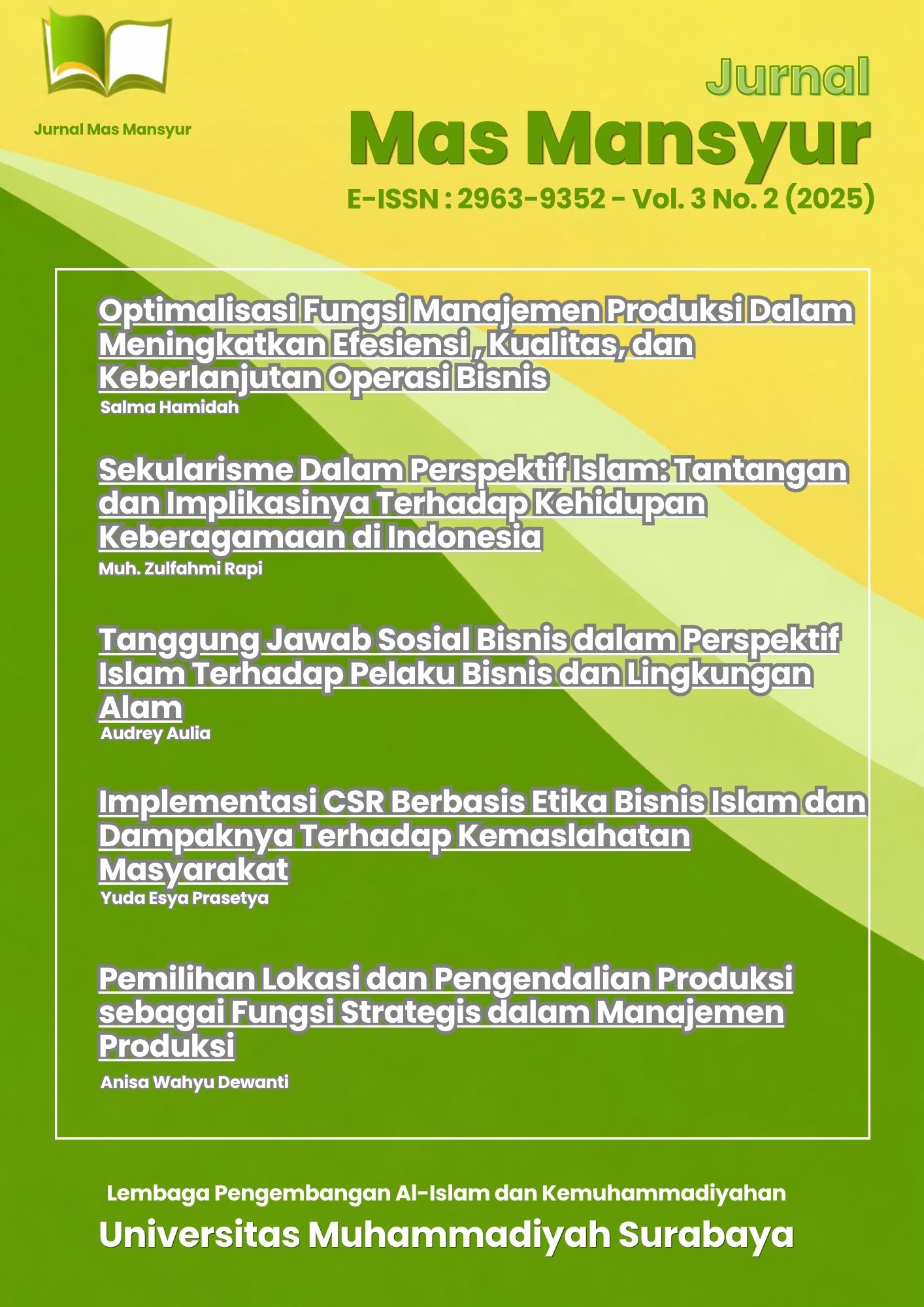
Optimalisasi Fungsi Manajemen Produksi Dalam Meningkatkan Efesiensi , Kualitas, dan Keberlanjutan Operasi Bisnis
DOI:
https://doi.org/10.30651/mms.v3i2.32852Keywords:
Manajemen produksi, fungsi produksi, efisiensi, kualitas, produktivitasAbstract
This article comprehensively discusses the function of production management as a crucial aspect of the operational success of an organization or company. Production management focuses not only on the technical process of converting inputs into outputs but also encompasses the strategic management of resources to achieve efficiency, effectiveness, and optimal product quality. In the context of increasingly complex global competition, the production management function plays a crucial role in ensuring business continuity through cost control, increased productivity, and adaptation to technological changes and market needs. This research uses a qualitative approach with a library research method, drawing on sources from books, scientific journals, and academic references related to production and operations management. The primary focus of this study is to identify and analyze the key functions of production management: production planning, organizing, directing, and controlling. These four functions are systematically analyzed to examine their interrelationships in establishing an efficient and sustainable production system. The results of this discussion indicate that the success of production management is largely determined by a company's ability to harmoniously integrate these four functions. Thorough production planning can minimize risks and balance production capacity. Effective organization ensures optimal distribution of tasks and resources. Proper direction can improve employee motivation and performance, while effective control can maintain product quality and reduce waste in the production process
References
Alfarisi, B. L., Fasa, M. I., & Suharto. (2023). Konsep Spiritual Marketing. Jurnal Dinamika Ekonomi Syariah, 10(1), 50–62.
Kristiani, D. P., Reni, F., Nurlaila, L., & Abdillah, M. (2024). Etika bisnis dalam perspektif Islam: Implikasi untuk praktek kontemporer. Co-Creation : Jurnal Ilmiah Ekonomi Manajemen Akuntansi Dan Bisnis, 3(2), 66–75. https://doi.org/10.55904/cocreation.v3i2.1239
Nur Isra’ Ahmad, & Supriadi. (2025). Etika Bisnis Digital dalam Perspektif Islam: Prinsip dan Implementasinya. QAZI : Journal of Islamic Studies, 2(2), 448–460. https://doi.org/10.61104/qz.v2i2.464
Purnawati, E., Hastuti, S., & Rochman, F. (2026). Analisis Pengaruh Kemudahan Penggunaan dan Promosi terhadap Keputusan Penggunaan E-wallet dengan Minat Penggunaan sebagai Variabel Mediasi pada Mahasiswa Perguruan Tinggi Islam. 10(1), 165–186.
Qisthia, T. (2023). Perkembangan Bisnis Peer To Peer Lending Fintech Syariah Di Indonesia. Jurnal Asy-Syarikah: Jurnal Lembaga Keuangan, Ekonomi Dan Bisnis Islam, 5(2), 123–132.
Sa’diyah, H. S., & Pangestu, R. A. (2023). Implementasi Etika Bisnis Islam Dalam Pemasaran Produk Umkm Follow Us Implementation of Islamic Business Ethics in Product Marketing Msmes “Follow Us.” Jurnal Syarikah, 4, 336–350.
Salehuddin, S. (2025). Penerapan Etika Bisnis Islam Dalam Lingkungan Organisasi Bisnis Pada Era Globalisasi. Jurnal Ekonomi, Akutansi Dan Organisasi, 3(2), 168–174.
Suwarna, A. P. (2026). PERAN ETIKA BISNIS ISLAM DALAM MENGELOLA HUBUNGAN DENGAN KARYAWAN DAN MITRA BISNIS : STUDI LITERATUR THE ROLE OF ISLAMIC BUSINESS ETHICS IN MANAGING RELATIONS WITH EMPLOYEES AND BUSINESS PARTNERS : A LITERATURE STUDY. (Beekun 1997), 1464–1468.
Three, A., & Waruwu, M. (2024). Spiritualitas Bisnis : Memperkuat Etika Dan Keberlanjutan Dalam Entrepreneurship Berdasarkan Nilai-Nilai Alkitabiah. TRACK: Jurnal Kepemimpinan Kristen, Teologi, Dan Entrepreneurship, 03(01), 42–60.
Downloads
Published
Issue
Section
License
Copyright (c) 2026 salma Hamidah

This work is licensed under a Creative Commons Attribution-NonCommercial 4.0 International License.