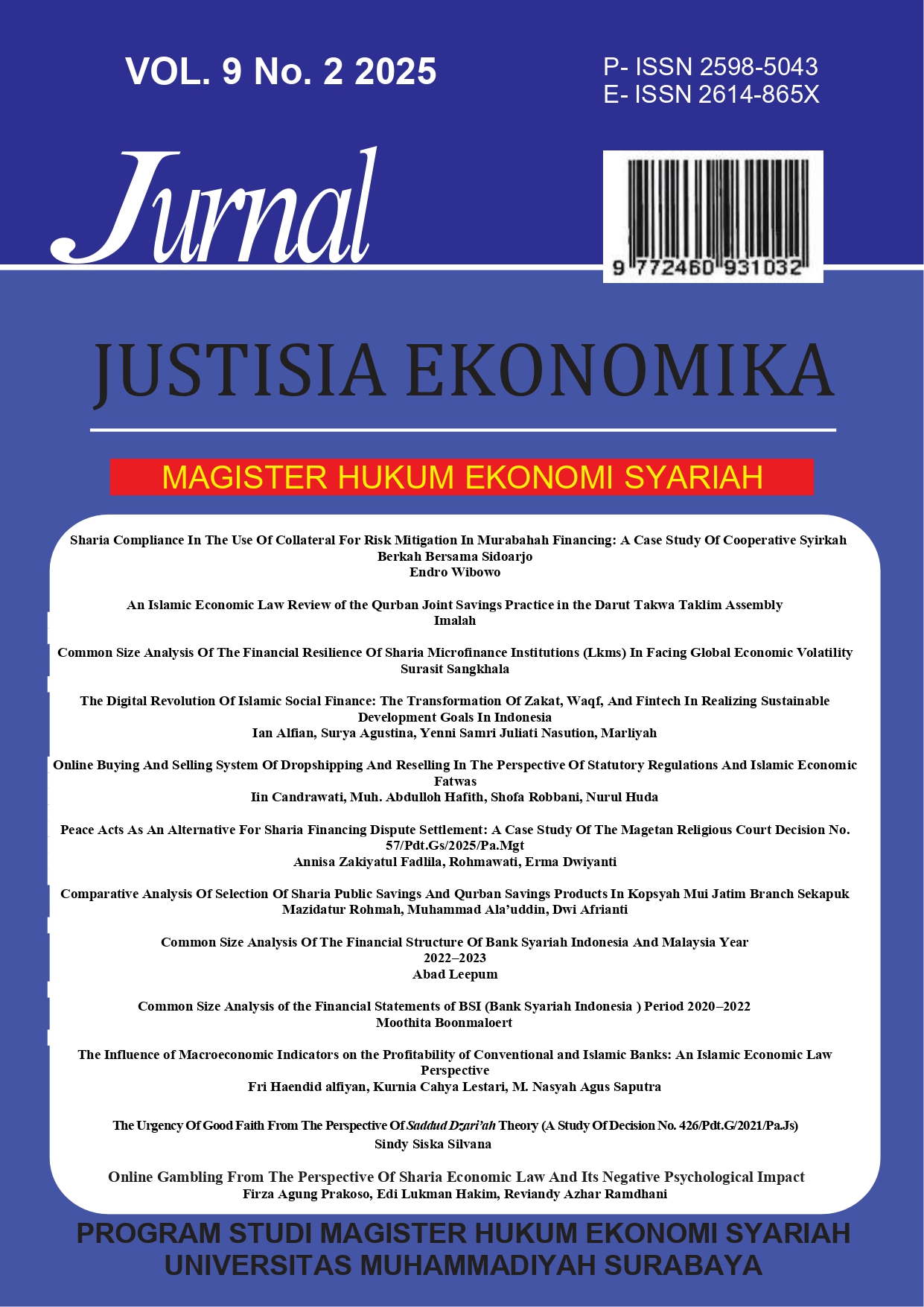
THE DIGITAL REVOLUTION OF ISLAMIC SOCIAL FINANCE: THE TRANSFORMATION OF ZAKAT, WAQF, AND FINTECH IN REALIZING SUSTAINABLE DEVELOPMENT GOALS IN INDONESIA
DOI:
https://doi.org/10.30651/justeko.v9i2.28413Kata Kunci:
Islamic Social Finance, Digitalization, Digital Zakat , Productive Waqf , Sharia Fintech, KNEKS, Sustainable Development Goals (SDGs)Abstrak
This study aims to analyze the transformation of Islamic Social Finance in the digital era and the strategic role of the National Committee for Islamic Economics and Finance (KNEKS) in strengthening the Islamic social finance ecosystem in Indonesia. The method used is a Systematic Literature Review (SLR) based on the PRISMA protocol, which includes the process of identification, selection, eligibility, and inclusion of scientific publications. A total of 25 selected articles published between 2019 and 2025 were analyzed using a thematic synthesis approach and quality assessment using the JBI Critical Assessment Tool. The research findings show that the digitization of Islamic Social Finance through fintech platforms, digital zakat wallets, digital waqf, and sharia crowdfunding has increased the efficiency of collection, transparency of distribution, and expanded access to services for the unbanked population. However, challenges remain in digital literacy, public trust, regulatory integration, and the readiness of the managing institutions' infrastructure. This study confirms that KNEKS plays a significant coordinating role in strengthening governance, standardizing policies, and integrating social finance systems with national development goals. The findings also show that Islamic Social Finance contributes to accelerating the achievement of the Sustainable Development Goals (SDGs), particularly poverty eradication, inclusive education, food security, and women's empowerment. The policy implications of this study include the need to improve digital and Sharia literacy, harmonize Sharia fintech regulations, and develop integrated digital platforms based on technologies such as blockchain and artificial intelligence to strengthen transparency and accountability.
Referensi
[1] Akhter, A., et al. (2025). Research trends in Islamic social finance: a bibliometric analysis from 1914 to 2022. International Journal of Ethics and Systems, 41(2), 455-483.
[2] Amin, H., & Mehboob, I. (2025). Zakat al-mustaghallat for residential property owners in Malaysia. International Journal of Housing Markets and Analysis, 18(1), 178-195.
[3] Ascarya. (2021). Sustainable Islamic social finance: Integrating zakat and waqf for inclusive development. International Journal of Ethics and Systems, 37(1).
[4] Aziz, M., & Rusydiana, A. S. (2020). Development of Islamic social finance in Indonesia: SWOT analysis. Journal of Islamic Economics, 12(2).
[5] Aziz, Y., et al. (2025). Zakat and Sustainable Development Goals (SDGs): The Chain Impact of Mandatory Zakat Expenditures on Education. Evidence from Pakistan. Asian Social Work and Policy Review, 19(1).
[6] Azizah, S. N., Azhari, A. R., & Wahyudi, R. (no year). Symposium on Islam in a Global Perspective. [Proceedings].
[7] Abdul Khir, M. F., Rahim, H., Fakhrunnas, F., & Mohd Zulkarnaini, S. (2025). Islamic Social Finance and SDG 2: Measuring the Social Impact of the Islamic Religious Council and Malay Traditions in the State of Perak. Malaysian Journal of Syariah and Law, 13(1), 134-146. https://doi.org/10.33102/mjsl.vol13no1.1016
[8] Bahri, E. S., et al. (2025). The Contribution of Islamic Social Finance in the COVID-19 Pandemic: Evidence from Indonesia. (Book chapter).
[9] Beik, I. S., & Arsyianti, L. D. (2019). The role of zakat in poverty alleviation and income inequality in Indonesia. Journal of Islamic Monetary Economics and Finance, 5(1).
[10] Elmahgop, F. O., et al. (2025). The Socio-Economic Impact of Waqf Investment Funds as a Sustainable Financing Model in Saudi Arabia. Sustainability (Swiss), 17(9).
[11] Febriandika, N. R., et al. (2025). Performance of Islamic Social Financial Institutions Post-COVID-19: A Balanced Scorecard Approach. Journal of Organizational Behavior Research, 10(2), 32-45. https://doi.org/10.51847/sg7vxThVCQ
[12] Firmansyah, I., & Faisal. (2020). Zakat governance in Indonesia: Issues and reforms. Journal of Islamic Accounting and Business Research, 11(2).
[13] Haryanti, P., et al. (2025). Building a Sharia economic ecosystem: Strategies and practices. Duta Sains Indonesia.
[14] Hudaefi, F. A. (2020). How does Islamic fintech promote financial inclusion? A qualitative approach. Qualitative Research in Financial Markets, 12(1).
[15] Hudaefi, F. A., & Beik, I. S. (2021). Digital zakat campaigns during the Covid-19 pandemic in Indonesia: A netnographic study. Journal of Islamic Marketing, 12(3).
[16] INDEF (Institute for Economic and Financial Development). (2023). Accelerating towards a green, inclusive, and superior Indonesian economy: Thoughts from 100 Indonesian economists. INDEF.
[17] Kasmon, B., et al. (2025). FinTech Applications in Islamic Social Finance in Asia: A Systematic Literature Review. Journal of Ethics and International Systems, 41(1), 213-237.
[18] Khamis, R., & Salleh, M. C. (2021). The role of Islamic social finance in enhancing financial inclusion: Evidence from Indonesia. International Journal of Islamic and Middle Eastern Finance and Management, 14(5).
[19] Kroessin, M. R. (2025). Udhiyyah and the livestock value chain: Islamic social finance for sustainable development. (Book chapter).
[20] Lubis, D. K., et al. (2020). The role of the National Committee for Sharia Economics and Finance (KNEKS) in strengthening the development of the sharia economy.
[21] Ma'ruf Amin, K. H. (2023). KH Ma'ruf Amin: Father of Islamic Economics in Indonesia. Gramedia Pustaka Utama.
[22] Mehboob, I., & Amin, H. (2025). Factors of technology acceptance and the influence of consumer creativity on ASNAFs' acceptance of digital wallet use. International Journal of Ethics and Systems, 41(1), 238-257.
[23] Robbani, T. M. F., & Mukhlis, M. M. (2024). Development of Islamic Economics and Finance in Indonesia Through the KNEKS Structure in 2019-2024. Journal Ar Ro'is Mandalika (Armada), 4(1), 35-45.
[24] Rusydiana, A. S. (2020). Prioritizing core principles of zakat in Indonesia: An Analytic Network Process (ANP) approach. ISRA International Journal of Islamic Finance, 12(2).
[25] Sarabdeen, M., et al. (2025). The Role of Social Financing in Promoting Social Justice and Shared Values: A Cross-Sector Study of MSMEs in Malaysia and Saudi Arabia. Sustainability (Swiss), 17(5).
[26] Sari, R. P., et al. (2020). The role of zakat institutions during the COVID-19 pandemic in Indonesia. Al-Uqud Journal of Islamic Economics, 4(1).
[27] Soleh, A. (2021). Waqf innovation and its role in Islamic social finance in Indonesia. Journal of Islamic Monetary Economics and Finance, 7(2).
[28] Sudirman, I., et al. (2021). Integration of commercial and Islamic social finance for sustainable development in Indonesia. Journal of Islamic Accounting and Finance Research, 3(1).
[29] Sugianto, E. (2024). Strategies to accelerate the development of the National Sharia Economic and Financial Committee (KNEKS) in improving Islamic financial institutions in Indonesia. Syarikat: Journal of Sharia Economics, 7(1), 1-13.
[30] Widiastuti, T., et al. (2025). Strategic Solutions for Women's Empowerment Through Islamic Social Finance in the Context of Maqasid Syariah: A Delphi-ANP Approach. Al-Ihkam: Journal of Law and Social Institutions, 20(1), 28-62.
Unduhan
Diterbitkan
Cara Mengutip
Terbitan
Bagian
Lisensi
HAK CIPTA
Penulis yang mengirimkan artikel dalam jurnal Justisia Ekonomika harus memahami dan menyetujui persyaratan tentang hak cipta jurnal Justisia Ekonomika sebagai berikut:
1. Hak Cipta tulisan / artikel yang diterbitkan di jurnal Justisia Ekonomika otomatis menjadi hak pengelola jurnal atau publisher
2. Meskipun Hak Cipta atas tulisan yang telah diterbitkan di jurnal Justisia Ekonomika adalah menjadi haknya publisher, tetapi penulis masih mempunyai hak untuk : a). Penulis boleh meng-upload di repository kampus, b). Penulis boleh meng-upload di webnya sendiri, c). Penulis boleh meng-upload di google schoolar, orchid dan sinta
LISENSI
Lisensi atas tulisan / artikel yang diterbitkan di jurnal Justisia Ekonomika adalah menggunakan Creative Commons dengan atribusi CC-BY-NC 4.0